Showing posts with label Coursework. Show all posts

Monday, March 29, 2010

Question 1

In what ways does your media product use, develop or challenge forms and conventions of real media products?


The genre for our film sequence was a hybrid of Crime and Thriller. Although these are two separate genres, they are often combined in the film industry.
Crime/Thriller films usually contain:
Genre Conventions                                                            

A film which follows most of these conventions and is of the same genre as ours is ‘Seven’ – starring Morgan Freeman and directed by David Fincher in 1995. The film uses a male villain who commits seven criminal acts – the film is very psychological and forces the audience to think a lot, there are clues throughout as to who the killer may be just like there will be in our film.


Our film also follows many of these conventions – we have a female character being raped by a ‘hard’ male villain. In our opening sequence there is a mix between the bright lighting of the girl talking to the camera in a direct address form, and dark and gloomy lighting in the build up to the rape.


A factor of our film goes against conventions is the fact that it is from the woman’s perspective. She gets raped and throughout the film, the audience sees how she copes with this and the repercussions of the act. Usually Crime/Thriller films are from a male perspective; either a male helping a female, like a policeman, or from the perspective of the criminal.


Setting
The setting of our sequence was important to create the correct mood and feeling:
- The build up to the rape scene was conventionally set at night - this plays on the audience's minds, suggesting hidden dangers and the sense  of the unknown
- The actual rape itself took place in a brightly lit flat - this is a location where the girl would feel safe compared to the dark outside. It is typical of a thriller to invade the victim's comfort zone and make them feel that nowhere is safe.


Costume
The costume’s we used were very much deliberate and key to our characters:
- We dressed the rapist in a large coat which covered most of his face to hide his identity. Other than that, he was wearing regular clothes as rapists don’t have set attire – they are just like ‘normal people’.


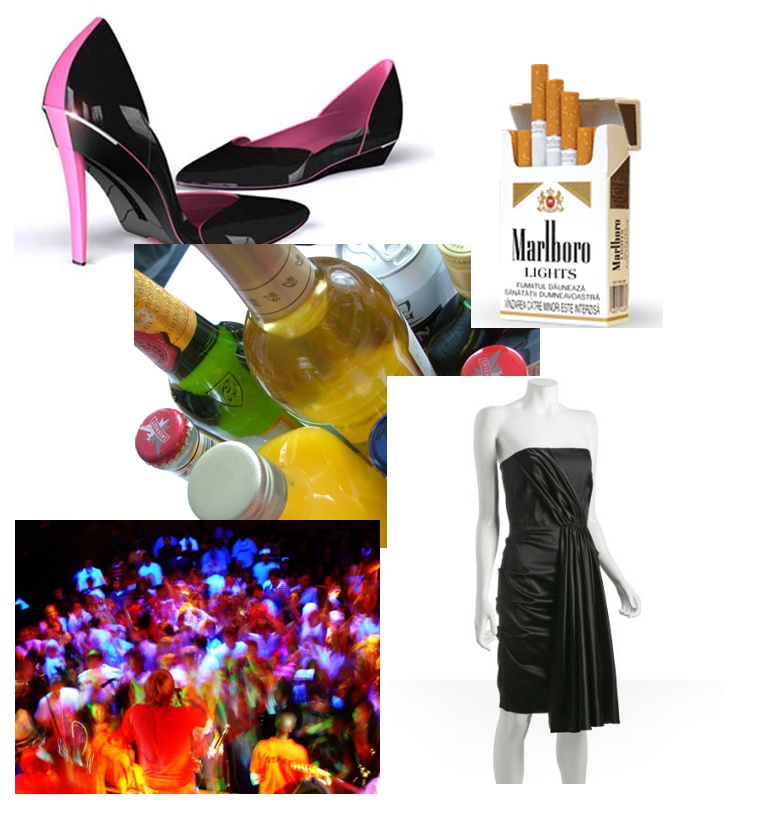
- For our female character, we dressed her in a relatively conservative outfit – a big coat and a skirt that wasn’t too short. However, the pink heels and skirt suggest she had been on a night out which is what we were trying to achieve – a naïve character who wasn’t expecting this to happen to her.


- For the clips of her talking to the camera after she had been raped, the girl was dressed in a baggy grey hoodie done up nearly to the top – this shows that she has been hugely affected by her rape experience and is trying to cover up and hide from the world.


Music
We used two pieces of music for our piece as there were two effects we were trying to achieve:


The first piece is a sad, mournful track called ‘sad story’. We used it in our sequence to create a sense of sorrow and sympathy for the girl. It runs over the second track and creates an eerie effect. http://www.freeplaymusic.com/search/keyword_search.php


The second piece we used is a typical thriller track from the same website. It builds tension and suspense and drives the sequence on – suggesting something bad is going to happen even before it does. 

 
Narrative Structure 
Our opening sequence also challenges theories such as Todorov's - a theory that claims films should start with an equlibrium where everything is as it should be,as example for this would be Legally Blonde. Our sequence does not follow this structure as it starts with a disrupted equilibrium and it is not restored .

Question 2

How does your media product represent particular social groups?

Our product targets two social groups in particular – age and gender.

Women 
Our main target would be women – our film is based on a female perspective and has a very female storyline. In a way the film goes against typical conventions of films aimed at women – it is filmed and edited in a very gritty style which isn’t necessarily what a female audience it looking for and is about a non idealistic topic - rape. However, the main protagonist driving our story along is a woman and the character is very relatable s as she is just an average girl like our audience who gets caught up in this horrible scenario. The naivety of the character may worry the audience and the film tackles a very real, serious problem of rape and its’ effects.


Young adults 
In terms of age, our product could appeal to a wide range. As the main character is young, an audience of viewers around a similar age group would find the film appealing and relatable – making this our primary target audience. The girl is similar to some characters already on the radar for young adults in popular culture for example the character in teenage drama skins – Effy Stonem. 

The characters are similar in their ‘party-girl’ lifestyle and the clothes our main character wears, and her social life – which would be shown in flashbacks throughout the film – is very similar to that of the popular teen character. However, our film could also be appealing to a secondary, older generation that enjoy psychological crime thrillers such as ‘Seven’. As our film requires deep thought in trying to work out who the rapist is and what will happen next, this more mature audience will find this factor satisfying, despite the younger cast.

Question 3

What kind of media institution might distribute your media product and why?

Our production company is GPH Productions – it is a production company based in the UK that specialises in making low-budget, indie films that tackle real problems with today’s society.


Our distribution company is Heartbeat Films – this is also a UK based company that work alongside GPH Productions to distribute their films. This is a mutually beneficial relationship as the companies work in synergy – building their relationships and the reputation in the industry together, whilst also making each other money.


Two companies that worked similarly in synergy in real life for the film Paranormal Activity (2009, Peli) are Paramount Pictures and Dreamworks. 


As Paranormal Activity was made on a low budget, like our film, the production company didn’t have the money to distribute on a large scale. They couldn’t afford to put the film in cinemas so it travelled around on the film festival circuit before eventually being seen and liked by people high up in the film industry – the film then got picked up by Paramount and was advertised, screened and distributed on a worldwide scale.


This is the same path I think our film would follow. As both our production company and our distributor are small companies who deal with low budget indie films, they would not be able to afford an elaborate marketing scheme. Instead, the film would be screened in small, independent cinemas such as The Phoenix in North London. Although this would not be ideal to attract our primary target audience – The Phoenix doesn’t tend to attract a young, female audience – our secondary audience of older women who enjoy psychological thrillers would be able to see it there. Our aim would be to eventually build up enough hype around the film, via word of mouth, that the audience demand for the film would go up - like with paranormal activity - and a larger distribution company would step in and pay for large scale advertising.


Hopefully they would be able to advertise and screen the film in places where our target audience would see it – on social networking sites like Facebook and Twitter, on TV channels such as MTV and E4 and show the films in large multiplex chains such as the Odeon and Vue.

Question 4

Who would be the audience for your media product?

Our Primary target audience for ‘The Safehouse’ would be young women between the ages of 18-32


This is Becky Thompson:
- She is a 21 year old female from LondonEngland
- She is at Leeds University studying Psychology.
- She loves watching films and TV in her spare time and her favourite programmes are CSI and Lie To Me.
- She particularly likes watching films that make her think, her all time favourite films are Seven and Hannibal.
- She loves to go out clubbing - she finds letting her hair down at the weekend after a long week is the best way for her to relax. 
- She goes to the on cinema campus on at least once a month to see the latest blockbuster – although when back home in London she tries to go to her small, local cinema as it shows smaller indie films which she also loves to watch.


We chose the girl in the film to play the role as she is a very relatable character – a naive young woman who is extremely unfortunate to be caught up in this situation. She leads a typical life that any of our audience could relate to - making the film experience all the more real.  By adding the element of rape to the film, it entices and intrigues the audience because not only is rape a scary and scarring experience, but it is something unknown to audience.

Question 5

How did you attract/address your audience?

In order to attract the right audience to our film, first we had to understand our target audience very well and then we had to shape our film around what would attract them to watch it.

When we came up with our idea, we decided we needed an actress for the main character that was average. She needed to be someone the audience could relate to – in looks, personality, dress and lifestyle. We achieved this with our final actress.


We chose a crime-thriller film as it would attract a wide audience and satisfy what a lot of people look for in films. We also knew that if there were tense moments that could be scary in our film; young adults would want to come with their friends or partners for comfort – drawing in yet more viewers.


- We shot our sequence during the night to add drama and effect to our piece – the darkness makes everything more eerie.
- The film is also shot in an abstract style – with flashbacks telling about half of the film and explaining what led up to the present situation.
 - Our audience fits into a small, niche group of which our knowledge was already good. We knew that they spend a lot of time on social networking sites such as Facebook and Twitter so to interact with them for events such as our feedback screening, we created a Facebook group.


Go to our Facebook event


- Our screening attracted an audience of about 50 viewers, it was very succesful as it allowed us to get feedback on our sequence from those outside of our group at whom the film was aimed. We created a questionnaire for the audience to fill out and from this we established what worked well in our sequence, whether it was understandable and what the audience thought could be improved upon.

Photos of our screening:


Our questionnaire filled out with the most common answers:

Question 7

Looking back at your preliminary task, what do you feel you have learnt in the progression from it to the full product?

The brief we were given for the preliminary task was;

A continuity task involving filming and editing:
- Character opens the door
- Walks across the room
- Sits opposite other character and exchanges a couple of lines of dialogues

It should contain different continuity techniques


The brief for the main task was;

To produce a 2 minute opening sequence for a fiction film, it must include:
- Titles throughout
- Some form of copyright free soundtrack
- Evidence of understanding of continuity editing

Pre-Production
When planning our production, there were several things learnt from the preliminary task that we put into practice. To avoid any problems with our location, we went on a reccie to see whether it was suitable for what we wanted to film there and to find out if we had permission to film there. We also realised that organisation was key to a successful production – this meant all the planning and research was completely up to scratch before we went of f to shoot. To achieve this we had arranged group meetings to makes sure what we all needed to do in order to succeed with the production.


Production
The preliminary task helped us a lot when it came to shooting our production. Realising that time management was important, we planned out our shoot days well, knowing how much time we had to do what – it also helped that we knew how to use all the equipment so we didn’t waste time trying to figure it out. We also learned in the preliminary task that a master shot was important when it came to editing – it was always useful to cut back to if there was a continuity problem such as a break in the 180 degree rule.


Post-Production
When it came to editing our sequence, we already knew how to use the software we were using – this helped in conserving our time and meant we could learn more advanced techniques. It also helped us to see who was stronger in what place – meaning we could save time when assigning roles.


Working as a team
Throughout the project, listening to one another and working together was the most important factor to making our final sequence. A mistake made in the preliminary task was that one of our group members had made a mistake whilst filmingand the whole team broke down because of lack of communication. This experience showed me how important it was to talk to your group and listen to what they have to say - this way if there are problems, you can avoid arguments.

Saturday, January 30, 2010

Group Final Idea

After thinking it through and getting feedback from both our teacher and our class, we made a final decision for our opening sequence. It will include;
- The build up and act of rape at night time
- A young woman, around the age of 18, getting raped in her own flat
- The girl is very average - enjoys going out with her friends to get drunk but isn't 'off the rails', just naive and unlucky
- One night she is followed home from a night out and shoved through her door - with the raping insinuated
- The girl will be telling the story in a police interview - we will include flashbacks of what happened that night which is an abstract, unique technique not often seen in films
- The man will be very dominant in the rape, showing a physical advantage in an aggressive, angry manner as opposed to sexual or passionate

Monday, January 25, 2010

Group Meeting

Once we had individually come up with a few ideas, we each proposed them to the group and together decided what our sequence would consist of. We all decided that the genre would be thriller but the sub-genres and themes for thriller are very wide so in order to narrow down our options and become clearer of what we wanted, we watched some past projects.

As a group we decided that in the past, two themes had worked well for thriller; rape and stalking. We thought we could do something along these lines and all tried hard to think of an idea that would be both effective and achievable.

Remembering a particular reconstruction i had seen on 'Crimewatch' last year, i found the clip on YouTube and the group decided that if our sequence was filmed similarly, it could be brilliantly effective - and hopefully not too hard.


Tuesday, January 19, 2010

Individual Initial Idea

After being given our brief, we were told to go off individually and come up with some ideas which could then be put forward to the group - taking our group idea from those. The group decided that we'd focus around the horror/thriller genre but this could vary if needed.

Initial Idea 1:
My first idea was based around a paedophile. I wanted the film to be about a man who stalks a young girl - this could be portrayed through him having pictures of her, following her online through social networks and also watching her from a distance as she goes about her life. The opening sequence could be of the man watching the girl from the school gates as she is picked up by her mother. The sequence would be made up of long shots of the girl and the playground and also close ups of the paedophiles face to build up his character.

Initial Idea 2:
My second idea was of a rapist story. I thought that the opening sequence of our film could be of a man as he followed a young woman on her way home at night. The girl would be very drunk and unaware that she was being followed and at the end of the sequence, the man would make his move - this insinuating that he'd raped her. The rest of the film would be about the girl as she came to terms with the rape experience and tried to get over this emotional experience.

Monday, November 9, 2009

Levi-Strauss Narrative Analysis

Claude Levi-Strauss looked at narrative structure in terms of binary oppositions - sets of opposite values which reveal the structure of media texts. Levi-Strauss was not so interested in looking at the order in which events were arranged in the plot but instead focussed on deeper arrangements of themes. For example, a story will be typically arranged in binary opposites such as: hero/ villain, rich/ poor etc.


Applying Levi-Strauss' Theory to Pale Rider
(Directed and Starring Clint Eastwood)
Binary Opposites:
- Quiet vs. Loud
- Still vs. Action
- Peaceful village vs. Speed & Panic
- Green trees vs. Dry plains
- Sun vs. Storm
- Night vs. Day
- Steady camera vs. Panning movement
- Slow editing vs. Fast editing
- Steady camera vs. Frantic camera movements
- Calm vs. Panic
- Life vs. Death
- Action vs. tension
- Happy music vs. Tense music
- Panic vs. Mourning
- Country vs. Village
- Attacker vs. Victim
- High angle vs. Low angle
- Black horses vs. White horse


Applying Levi-Strauss' Theory to Die Hard
(Directed by John McTiernan, Starring Bruce Willis)
Binary Opposites:
- Joking vs. Tense
- Serious vs. Joke
- Family vs. Work
- Happy vs. Sad
- Low and high angles
- Older characters vs. Young children
- Happy driver vs. Reserved passenger
- Happy party vs. Sinister street
- Youth vs. Age
- Night vs. Day
- Real vs. Fake
- Loud vs. Quiet
- Chatty vs. Reserved
- High tech vs. Old fashioned
- Trivial matter vs. Serious
- Outside vs. Inside
- Day vs. Night
- Open vs. Enclosed
- Black titles vs. Coloured titles
- Love vs. Fight
- Fast vs. Slow pace
- Music-happy vs. sad
- Prepared vs. non-prepared
- Novice vs. experience
- Peace vs. danger
- Innocence vs. danger
- New York vs. LA

Tuesday, October 20, 2009

Preliminary Exercise

Evaluation


I worked with Michael, Despina and Claire for this task and we all contributed ideas and suggestions for the preliminary excercise. We studied the brief and then came up with ideas for a plot and a shot location. On professional shoots, there are certain roles taken on by different members of the crew, these include; a director, a camera operator, an actor, a sound technician, a light technician and a runner - sometimes there are more than one person doing each role ie. more than one actor. We decided that in order to get a good feel of what a real shoot consists of and also in order for our shoot to work, we would try and have somebody doing each role - a hard job seeing as there were more roles than people. In our first meeting we decided that Despina and Claire would be our main actors and that i would also act towards the end of the sequence. This meant that Michael would be left to do most of the camera work for the sequence although for some of the time i took on this role as i was only in a couple of shots - this shared the responsibility and also allowed both of us to get some experience of filming. Michael and I also took turns in being sound technicians as there weren't enough group members to share this role out. When we came to edit our sequence, Despina and I did most of the computer work although we made the decisions of what to edit as a group - trying to avoid continuity errors and achieve a seamless sequence. Overall i found working with my group an enjoyable experience, we encountered some technical difficulties but overcame them without arguing which i felt was important. We all contributed a lot to the task, each bringing something different to the group, and altogether worked well by being reliable and giving our all.
How did you plan your sequence? What processes did you use? What theories did you try to take into account?
To plan our sequence we had one initial meeting in class and this is were we decided the idea for our sequence and worked out location and actors. The brief stated that we had to include; a character walking in and sitting opposite another character, and a brief dialogue, and observe important continuity rules including the 180-degree rule, the 30-degree rule, shot-reverse-shot and match-on-action, so when planning we tried to take all of this into account. We drew out our plans in the form of storyboards, brainstorms, shot lists, scripts and then went to the location to look at size and space and to check our sequence would work the space provided. We then scheduled another meeting for the end of the week where we went over some final details and made sure that the script and storyboard worked properly.What technology did you use to complete the task, and how did you use it?
Before we started this task we were given a demonstration on how all the hardware and software works and were also taught all the correct dialogue used on a professional shoot - this gave us a better grasp on the task at hand and made it easier for us to film.


The hardware we used:
- Canon HDV camcorder which used a mini DV tape format
 - we used the record button to start and stop filming and the rewind button to view what we had shot
An extendable tripod which made our shots steadier and allowed us to avoid the shaky, home video feel making our video seem more professional
- We opted for a shotgun mic rather than a boom mic simply because we were shooting in an enclosed space and there was no real need for the microphone to be up closer
- We used headphones so the sound technician could hear what was being recorded by the shotgun mic without hearing out
We also used a clapperboard to record each shot before we filmed any action so that we could separate each shot - this made it easier when it came to capturing for editing
- We used a PC based editing suite

 The software we used included:
- We used Adobe Premier Pro - a PC based digital editing suite - to edit our sequences on the computer. The tools we mainly used were; the razor tool which allowed us to cut up each clip and delete the clips we didnt need such as those of the clapper board and mistakes made whilst filming we also used the drag icon to transport clips between the timeline and the over-view window and also to move clips up and down the timeline to fit our sequence together. Another tool we used was the title tool to add text the beginning and the end of our sequence and also the source and output monitors which allowed us to watch, pick and choose sections of footage we needed.
What factors did you have to take into account when planning, shooting and editing?
When we were planning our sequence one of the most important factors we had to take into account was the fact that we only had four group members and on a professional shoot there are usually many more needed. To get around this problem we designated more than one role to some group members for example in some shot's Michael is the director and the camera operator as other group members were actors in the shot. We also had to consider the limited space we would have on location - we had to work out where would be the best place to shoot our scene, taking into account the lighting of the location - as this was uncontrollable for us - and also the background noise we could possibly hear from other groups around the location. We had to seriously consider continuity when planning and shooting our sequence to make sure we had no errors in our continuity. When it came to editing, time management was important as we were limited to how long we were allowed to edit for. Therefore, we had to make sure our sequence flowed well and made sense whilst also keeping an eye on the time it took us.
How succesfful was your sequence? Please identify what worked well, and with hindsight, what you would improve/do differently.
I think overall the shoot was not as successful as i had hoped as there were several errors and the finished sequence was not as seamless as i would have liked. However, there are definitely some positives that can be drawn from our sequence on top of the fact that i learnt alot about shooting a scene like this. For instance, i think we observes the continuity rules very well and none were broken by the time we had finished editing which is a great positive, we also included rules such as match-on-action and shot reverse shot which i was pleased with. I also think our sequence runs well and as seamlessly as possible which is definitely a positive thing. I think a shot that worked particularly well was the second shot the actor walks into the room, this works very well as an establishing shot for the sequence and reveals the setting. Also successful were the reaction shot's at 0:12 and 0:20 - i felt they were very effective as the camera captures good emotion of the characters' face and the shot is well framed. A shot which also reveals the space between characters' well and helps further establish the scene is between 0:16-0:17 - a shot which would in my opinion help the audience. Given the chance to re-shoot this sequence, i think i would find another location - one where there was more room to manouvere the camera and with less background noise - and also slow down the pace of the conversation between the actors to give more time for the audience to take in what is happening and to make the editing more seamless and effective. The framing of our whole sequence could be improved and i think this would have been easier to achieve with a different shoot location.
What have you learnt by completing this task? Looking ahead, how will this learning be significant when completing the rest of your foundation coursework, do you think?
By completing this preliminary task i have learnt several things which will help me in future and in the rest of my foundation coursework. Most importantly perhaps, i have learnt about continuity - this is vitally important, for example at one point in one of our takes we broke the 30 degree rule and I know that I will now never break the rule again
I also learnt a key lesson in working as a team - our group had a huge problem in that the camera man made an error, losing a lot of the scene's we thought we had shot. Personally i think i dealt with this situation quite poorly and let the stress get to me and in hindsight i can see that in situations like this it is best to keep calm and try to resolve the problem as a group instead of getting frustrated. I learnt that storyboarding is very important to get a clear idea of what the group is trying to shoot and also learnt the roles taken by crew members on a professional shoot such as; the director and director's assistant, camerman, lighting and sound techinichans etc. I was also taught the dialogue used by these members to communicate such as calling 'Camera rolling!' to signify that they are ready to shoot. I think all of these things will help me when i come to shoot my coursework sequence as they can all be put into practice as things that will benefit me and my group.

Monday, October 5, 2009

Evaluation Of Accident


1. What did you think was the point to this activity?
I thought the point of the task was to show us the possible difficulties that can be encountered when filming an un-edited sequence - it showed us that achieving continuity can be hard especially without the oppurtunity to cut and edit shots. It also proved useful in showing us the methods and techniques of continuity as we were able to learn from our mistakes.

2. In regard to your finished sequence, what worked well?
In my opinion there weren't many successes in the short clip my group made. One positive point that can be drawn from our video is that we definitely left enough time on each shot, giving the audience time to absorb what was happening, although this could also be seen as a negative point at times as some of our shots were too long. If i had to pick a best shot it would probably be the establishing shot as the camera work was good, with the camera following the subject as they walked. The low-angle shot also worked well but it didn't really serve any purpose.

3. What would you aim to improve about your sequence?
If i was to re-film this sequence i would change quite a few aspects of the video. To start i would change the length of the first shot - although i understand it is important to give the audience enough time to absorb each shot, i think the length of it is far too long and i would make the shot at least four seconds shorter. Secondly i would probably get rid of the low angle shot, as although it was successful as a shot, in terms of establishing the right mood of the sequence it served no real purpose as it seemed quite dark and mysterious - more suited to a thriller sequence than ours. Thirdly, and perhaps most importantly, i would make the subject of the video more clear to the audience - from just watching the video you get absolutely no idea what is going on so i would perhaps add a shot of the untied shoe lace to set the accident up give a clearer idea of what is going onIn terms of creating continuity, i would make sure we did not break either the 180 or the 30 degree rule as these are both important if you are to maintain continuity in a sequence although i was not aware of this beforehand. Lastly i would make the cuts and transitions between shots more smooth, this would be hard if we were not editing but it would definitely be achievable to make the shots run from one to the other more smoothly.

4. What did you learn from doing this activity?From this activity i learnt a few things about shooting without editing and also the concepts of continuity. By shooting and analysing the sequence i've learnt that maintaining a smooth, logical sequence without editing is difficuilt as going back and re-shooting shots is almost impossible to do seamleasly. I also learnt the main continuity techniques such as; match on action, the 180 degree rule and shot-reverse-shot and how to apply them.